
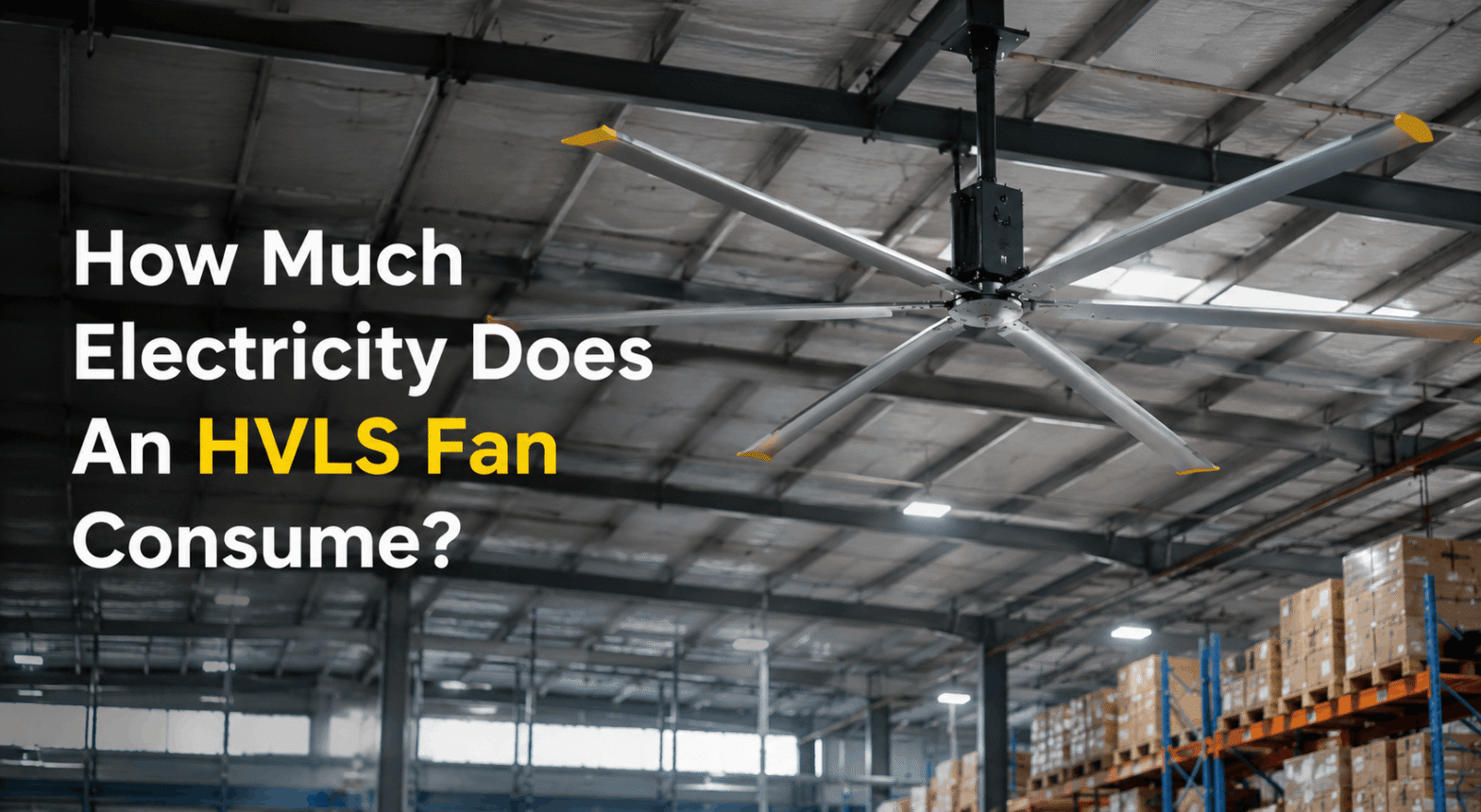
Understanding HVLS Fan Power Consumption
In contrast to traditional industrial fans, which work at high speeds, HVLS fans turn at low speeds with blades of large diameter. Instead of delivering focused airflow, they deliver a smooth breeze over wide areas. Typically, an industrial HVLS fan will consume 100 watts to 1.5 kilowatts (kW) depending on:- Fan size
- Motor type
- Speed controls
- Load conditions
- Installation environment
What Factors Influence Electricity Consumption?
A number of factors affect the amount of electricity consumed by an HVLS fan.- Size of the Fan
- Motor Type
- Speed
- Operating Hours Per Day
How to Calculate Electricity Consumption
To calculate the electricity used by an HVLS fan, you have to use the following formula: Electricity Consumption (kWh) = Power Rating (kW) × Operating Hours Example:- Power of fan: 1.2 kW
- Operating Hours: 8 hours
Are HVLS Fans More Economical Compared to Other Fans?
Yes, definitely. Rather than using a lot of high-speed fans, one single HVLS fan can circulate air in thousands of square feet. It results in less consumption of energy by motors while offering more efficient airflow. Furthermore, high-volume low-speed fans help in the proper distribution of air, thereby eliminating any hot or cold spots in the area. The improved air circulation ensures that one is able to increase the temperature of the air conditioners without compromising on the comfort of the occupants in the facility. In winter, reversing the fan helps to redistribute any warm air trapped near the ceiling.Can HVLS Fans Cut Electricity Bills?
Yes. Even though the HVLS fans use electricity, they usually result in energy savings due to reduced workloads for HVAC systems. Benefits include:- Less need for air conditioners
- Even temperatures
- Ventilation
- Less humidity
- Improved comfort for workers
- Saving money on heating during winter due to air destratification
Why Businesses Like HVLS Fans
HVLS fans have become very popular among different industries due to their good performance and low cost of operation. The main areas of their application are:- Warehouses
- Factories
- Distributing centers
- Sport arenas
- Hangers of aircrafts
- Malls
- Agricultural facilities
- Dairy farms
- Poultry farms
- Exhibitions