
Demand For Industrial Air Cooling Systems
According to the Grand View Research, the global industrial cooling market is estimated to be valued at USD 22.58 billion in 2024, and it is approx to grow to USD 34.71 billion by 2030. It is growing CAGR of 6.9% from 2025 to 2030.What Are Industrial Air Coolers?
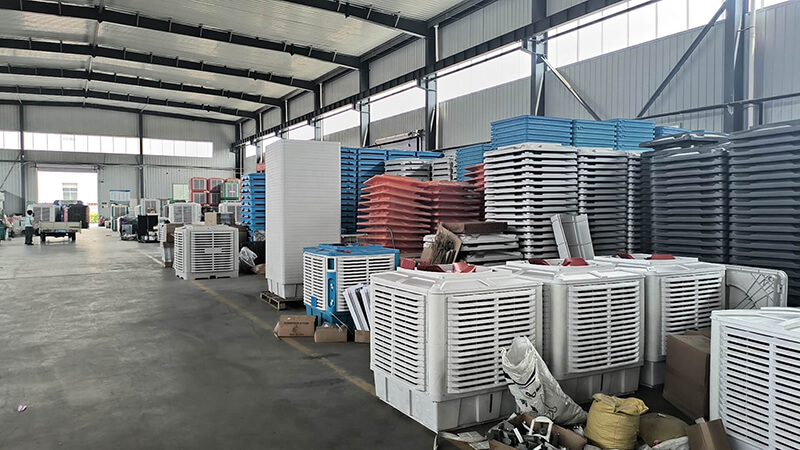
The industrial air coolers are also known as the duct coolers. They evaporate hot air into cool air with the help of effective water flow. Industrial duct air coolers are especially designed to maintain a comfortable environment across large industries with a natural evaporative cooling process. Duct air coolers move large volumes of air to improve proper ventilation or maintain a healthier environment across the industry. Their durable and compact design cost cost-effective for factories, warehouses, and manufacturing units
Let's Understand The Water Consumption In Industrial Air Coolers.
Industrial air coolers work with water and air evaporation processes to cool the air with water. Water consumption is essential to cool the air or ensure the devices remain eco-friendly. The effective water cooling system consumes less water and optimizes comfort or performance in large industries. When compared to traditional air conditioning systems, it is also more energy efficient than industrial air coolers. Most of the industries adopt an industrial air cooling system to enhance their performance with cost-effective or energy-efficient solutions.Why Does The Industrial Air Coolers' Water-Cooled Consumption Matter?
Using an industrial duct air cooler means consistent airflow and relies on an evaporative cooling system, which means it is consistently used to cool the air with high usage, or most companies face:- High water usage
- Higher operational costs
- Lowering cool efficiency
- Environmental concerns
- Enhance maintenance
What Are The Effective Smart Ways To Reduce Water Consumption In Industrial Air Coolers?
Want to reduce water consumption in your industrial air cooling system, so you need to measure various industrial cooling needs, such as:1. Use High-Efficiency Cooling Pads
Update your industrial duct air cooling system with better and effective ways to save water consumption. You need to choose cellulose pads, which are also known as honeycomb pads, rigid media cooling pads for effective water consumption.Benefits:
- Retaining water consumption
- Higher evaporation efficiency
- Less frequent wetting
2. Install an Automatic Water Level Controller
Most of the industrial duct air cooler companies provide an automatic water level controller, like bigvent fans, because it is necessary for reducing water wastage or manual errors.3. Optimize the Water Pump Speed
Not every industrial cooler needs the pump running at full power while using:- VFD’s system
- Smart pump controllers
4. Reuse Drain Water
Various industries use drain water again and again. They use drain water for:- Gardening
- Floor cleaning
- Non-critical washing tanks
5. Use Advanced Technology For Scale Formation
Use a TDS controller that reduces scale formation on pads or requires more water to bleed off. Also, you can use a water purifier system to reduce scale chemicals.6 Schedule Regular Maintenance
Without proper maintenance, the industrial air coolers always want more water. You need to ensure the:- Clean the sump
- Remove scaling
- Flush nozzles
- Check for leaks
- Replace clogged pads
- Fix water tank leakages
7. Integrate with smart sensors
Most of the industries are integrating with industrial smart sensors, and these sensors ensure:- Water flow rate
- Evaporation rate
- Pad saturation
- Real-time usage
What Are The Benefits Of Reducing Water Consumption From Industrial Air Coolers?
| Benefits | How It Helps |
| Less Water Bills | Save your water bills |
| Effective Cooling | Makes your commercial environment comfortable and works smoothly |
| Eco-Frindly | Helps to save water and the environment by providing natural ventilation |
| Expand The Machine's Lifespan | A cooler environment makes the machine's condition good for many years |
| Less Problems | Consume less scale or fewer breakdowns |
People Also Ask About How To Reduce Water Consumption In Industrial Air Coolers.
Q.1 How to choose the best industrial air cooler for a manufacturing facility?
A: Firstly, you need to inspect your industrial facility and consider size, facility, power supply, or all industrial conditions. Ensure:- CFM
- Building quality or quantity
- Local climate and humidity