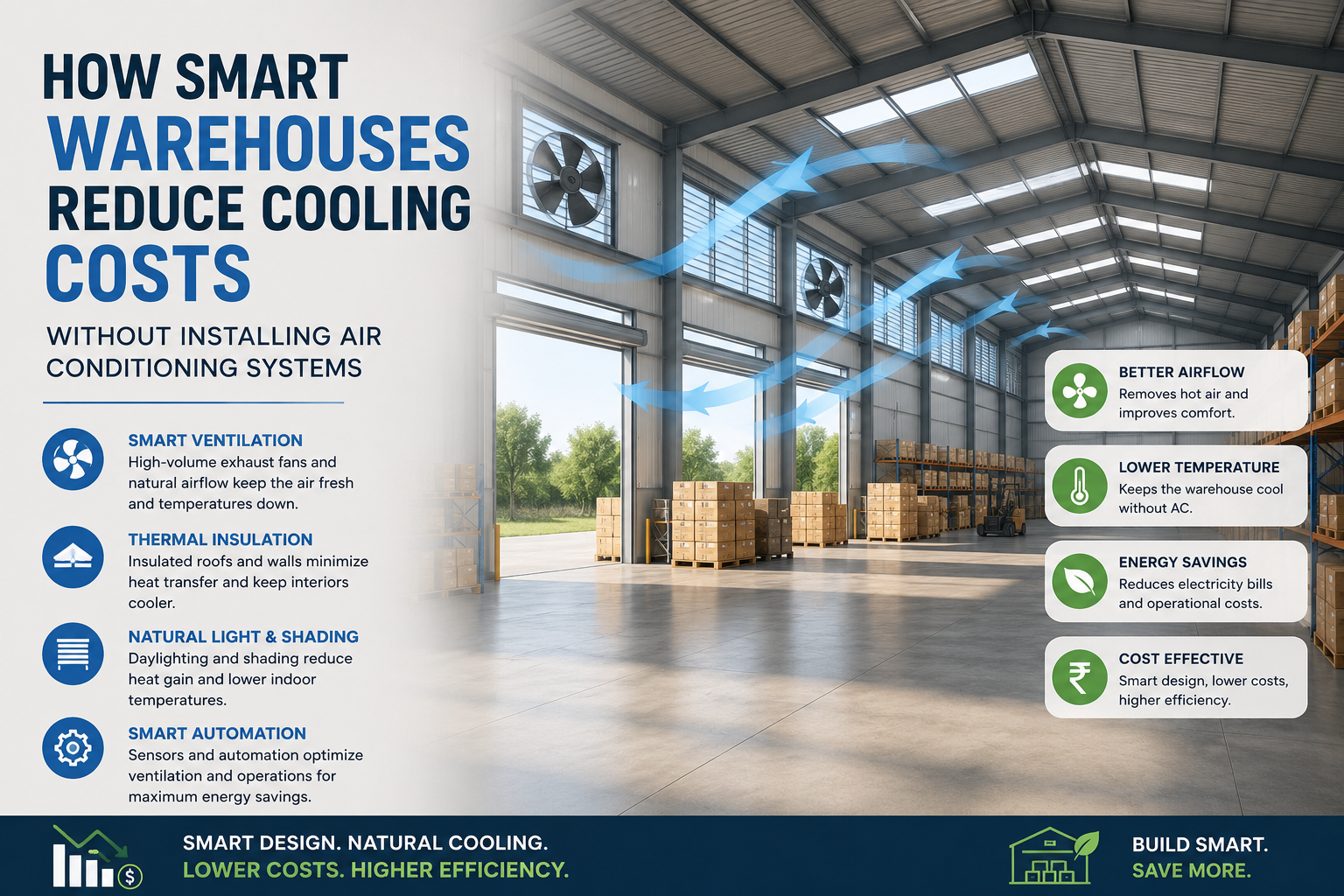
Warehouse temperature control can be tricky, especially in the hot summer months. Many businesses think that putting in large air-conditioning units is the only way to keep warehouses cool. Unfortunately, air‑conditioning systems can be quite expensive to purchase, operate, and maintain. Therefore, as energy prices continue to increase, smart warehouses have started thinking outside the box and looking for innovative solutions to reduce their cooling costs without relying on traditional air-conditioning systems.
Smart warehouses combine the use of intelligent design, contemporary technology, and energy-efficient practices to provide comfortable work environments while substantially lowering their operating cost.
In this blog, we will talk about
how Smart Warehouses Reduce Cooling Costs Without Installing Air Conditioning Systems.
Defining the Cooling Challenge
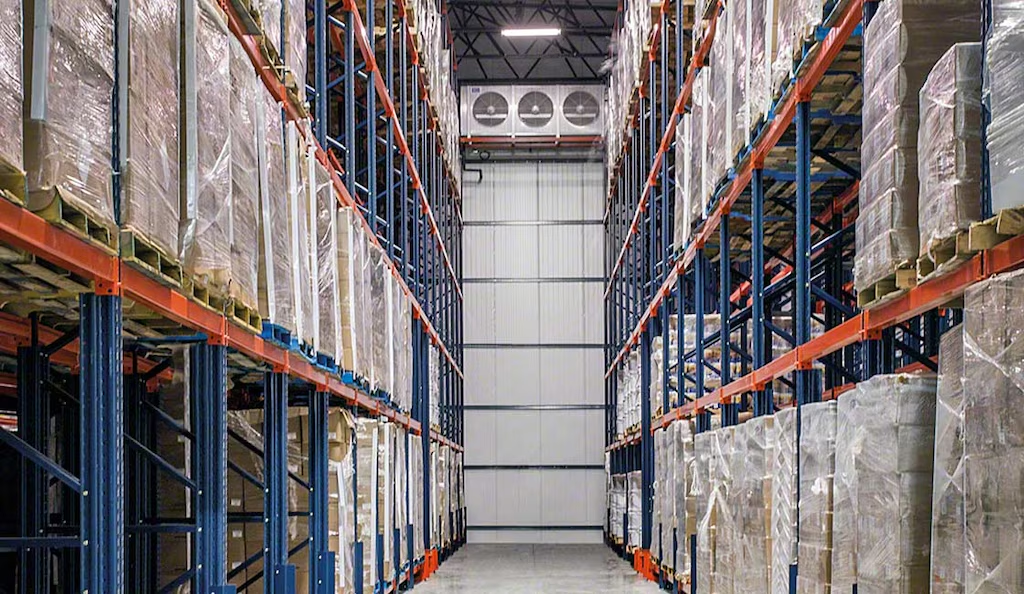
Warehouses typically present many challenges when it comes to cooling due to their size, high ceilings and because the conventional type system is difficult to adequately cool. Moreover, not all areas of the warehouses are occupied by employees, so it is unnecessary to cool the whole building when just one or two areas will provide enough cooling for the employees.
Heat can enter the warehouse through several potential sources such as a roof, wall, loading dock, machine and/or the sun. If heat is not kept in check, it can raise the temperature of an indoor area very quickly and can greatly hamper the productivity of employees, the quality of products, and/or the performance of machinery.
Smart warehouses utilize a variety of cost-effective options to face these challenges.
Enhancing Building Insulation
One very effective method to minimize the amount of heat established in a warehouse is to improve its insulation. Insulation provides a barrier that prevents heat from the outside from entering the warehouse and increasing indoor temperatures.
Today's warehouses frequently utilize:
- Insulation for roofing materials
- Thermal wall panels
- Reflective roof coatings
- Sealed windows & doors
This has resulted in a more consistent indoor temperature and a decrease in mechanical cooling.
Applying Natural Ventilation
Innovative warehouses utilize natural air movement whenever possible through the strategic positioning of vents, windows, and roof openings to allow for the escape of warm air and to facilitate cooler air being brought into the building.
Cross-ventilation systems allow for a continual flow of air throughout the facility. Roof ventilators and ridge vents allow for the removal of trapped hot air due to its tendency to rise towards the ceiling.
Natural ventilation decreases the indoor temperatures, without the usage of an enormous amount of energy.
Adding High Volume Low Speed (HVLS) Fans
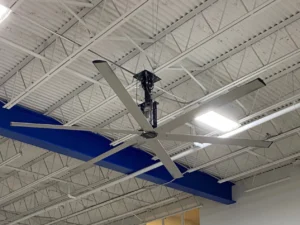
HVLS fans are utilized in today's warehouses to efficiently move large volumes of air.
These sizable ceiling fans:
- Increase air flow
- Decrease the amount of heat that has built up in an area
- Provide cooling for workers
- Use significantly less energy compared to an air conditioning system.
The continuous movement of air produced by the HVLS fans allows workers to feel comfortable even in high ambient temperatures.
Smart Monitoring of Temperatures
Technology plays a key role in the management of modern warehouses. Smart sensors provide real-time monitoring of temperature, humidity and air flow.
Warehouse managers can take advantage of this information to:
- Identify hot zones
- Optimize their ventilation systems
- Modify their fan speeds
- Enhance overall comfort levels to promote more productive employees.
Heat-Reflective Roofs
A common area for heat gain in a warehouse is through its roof. Doing so, a smart warehouse can greatly minimize its absorption of solar heat using roofing materials that reflect sunlight instead of absorbing it, thus:
- Indoor temps will be lower
- Less heat entering the facility
- Reduced air conditioning expense
Reflective roof coatings are often a relatively low-cost upgrades that offer long-term energy savings.
Warehouse Layout Optimization
A smart layout provides a way to greatly increase airflow and improve temperature control.
To achieve this, businesses will:
- Provide aisles unblocked to promote airflow
- Use strategic placement when locating heat-producing equipment
- Separately store items that are temperature sensitive
- Reduce congestion around work stations
Efficiently laid out warehouses enable their ventilation systems & fans to operate most efficiently, thus the overall comfort level will be enhanced.
Automated Management of Dock Doors
The dock door area is one of the greatest channels for airborne heat intrusion. An open dock door for too long enables warm outside air to enter the building for an equally long period.
Automated dock doors only open on demand, are instantly closed when not in use, minimize indoor temperature swings and reduce energy usage.
As you might expect, this simple upgrade will have a noticeable affect on the indoor temperature.
Using Warehouse Management Systems (WMS's)
The modern software programs of WMS's can greatly enhance the operational efficiency of various warehousing functions. By eliminating the misuse of equipment and improving workflow, warehouses will produce less heat, thereby adding another reason to implement a WMS.
Using Efficient Lighting to Save Energy
Traditional light systems are inefficient, but with a modern design companies can replace outdated fixtures with LED lights. This not only saves on the amount of heat generated by these lights but also saves on electricity.
Blockquote
Smart warehouses stay cool by preventing heat, not fighting it.
Conclusion
Companies operating in smart warehouses demonstrate that expensive commercial air conditioning systems aren't always necessary to maintain effective temperature control. With the current emphasis on being environmentally responsible and improving productivity, companies can use the strategies employed by smart warehouses to achieve cost savings, improve employee comfort, and help support long-term growth.
Big Vent Fans is a top company that provides the highest quality fans for warehouses and for other commercial purposes. Feel free to know more about their products and services.
Contact Details
Company name - Big Vent Fans
Contact - +91 78618 67019
Address - Bigventfans, 34 FF K 4.2 Vatika Independent Floor, Sec 83, Gurgaon 122004
E-mail -
info@bigventfans.com
Frequently Asked Questions
How do smart warehouses stay cool without using air conditioning?
Smart warehouses use insulation, roofs that reflect light, using natural daylighting, using natural venting, and utilizing low-powered fans.
What type of fans are used in warehouses?
HVLS (High Volume, Low Speed) fans are large ceiling-mounted fans that can greatly enhance air circulation while using very little energy.
Does insulating a warehouse really reduce cooling costs?
When properly insulated, outside heat cannot enter the building and will help to maintain temperature stability.
Why is it important for a smart warehouse to take advantage of natural ventilation?
Using natural ventilation helps to remove excess heat from the building and helps to provide greater air movement without increasing the amount of energy used.
What role do smart sensors play in controlling warehouse temperature?
Smart sensors provide real-time information on the temperature and humidity levels within the facility, which allows managers to make modifications to their cooling systems.
Can switching from a traditional light source like incandescent or fluorescent bulbs to LED bulbs reduce cooling costs?
Switching from an incandescent or fluorescent light bulb to an LED bulb will help to reduce the amount of heat produced from those light sources and therefore, help to reduce the amount of heat that is removed from the facility.