
bigvent fans

The Hidden ROI of HVLS Fans

Meet Patel

Written by Meet Patel

The Hidden ROI of HVLS Fans How One Upgrade Can Improve Productivity, Safety & Employee Retention
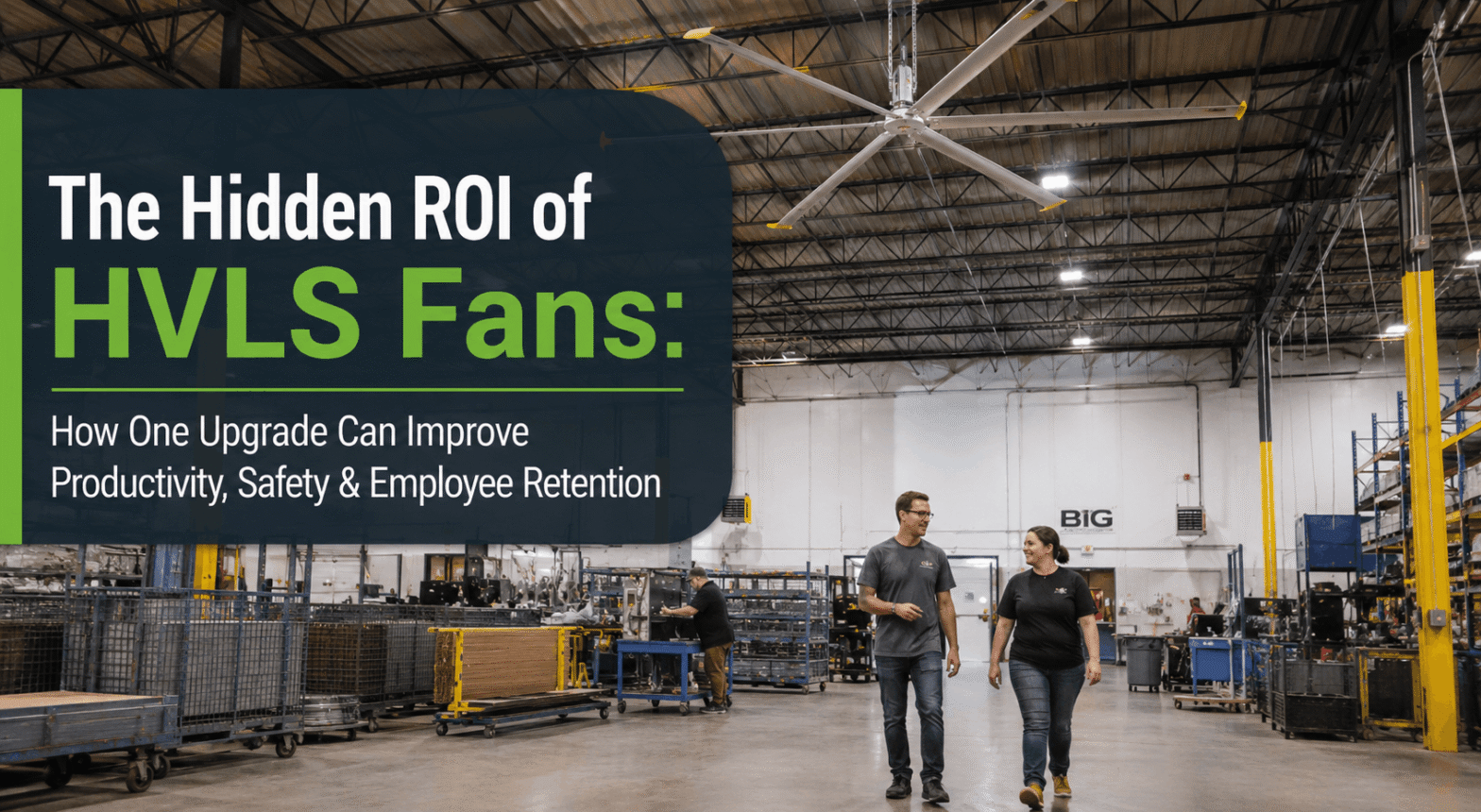
The Hidden ROI of HVLS Fans: How One Upgrade Can Improve Productivity, Safety & Employee Retention - When looking for ways to increase efficiency in operations, companies usually opt for technology improvements, automation, and equipment upgrading. But the issue of The Hidden ROI of HVLS Fans: How One Upgrade Can Improve Productivity, Safety & Employee Retention is becoming increasingly relevant nowadays among facility managers and executives. HVLS fans (high volume low speed fans) can do much more than just create air flow - they can make employees comfortable, improve their safety and productivity, and increase the chances of retaining them.

Productivity: The First Layer of ROI

Employee productivity depends on their comfort at work. Overheating, high levels of humidity, and a lack of proper air circulation make people tired, unproductively distracted, and less focused on work. It is not an easy task to create a comfortable work environment in warehouses and other large manufacturing plants. With the help of HVLS fans, you will be able to ensure the constant air movement that makes people feel more comfortable and productive. Minor improvement in the productivity of the workforce is very profitable for companies.

Cost Savings from Enhanced Safety Measures

The issue of workplace safety is yet another area in which industrial HVLS fans prove valuable. Dehydration, overheating, and tiredness are some of the health problems that can be caused by inadequate ventilation and high temperatures, and might result in workplace accidents. Through improved air flow and reduced humidity, HVLS ceiling fans create a more secure working environment; they also reduce the risk of slip-and-fall injuries caused by moisture on the floor. Among the key advantages associated with safety are:
  • Fewer cases of heat-related illnesses
  • Higher employee alertness
  • Lower accident rate
  • Greater workplace safety compliance
  • Less downtime due to accidents
And when people work in a safe and comfortable environment, they are happier.

Employee Retention: The ROI Many Companies Miss

Employee turnover is one of the most costly problems that companies have to deal with. Onboarding, recruiting, and training new employees takes much time and effort. While remuneration and professional development opportunities are crucial, working conditions cannot be overlooked either. Using HVLS fans in warehouses and industrial facilities is a way to prove your dedication to the health of your employees. Satisfied employees usually tend to feel better about the conditions of their work and stay with their company longer. In the competitive labor market, creating conditions for your employees that prioritize comfort can help you:
  • Decrease employee turnover 
  • Improve job satisfaction 
  • Build workplace culture 
  • Increase employee engagement 
  • Establish a good company reputation
The comfort of the workplace can become a great advantage when hiring and retaining talented people.

Energy Saving That Increases ROI

Another big benefit associated with energy-efficient HVLS fans is lower operating costs. This type of technology is used along with the HVAC system to provide conditioned air more efficiently within large buildings. During summer, employees will be able to stay cool despite higher thermostat settings. In winter, HVLS fans contribute to better stratification of air and bring the warm air down from the ceiling to the area where people work. The above will result in:
  • Lower heating and cooling costs
  • Less strain on the HVAC system
  • Increased equipment lifespan
  • Better energy efficiency
  • Greater sustainability efforts
Overall, these factors help in providing substantial savings over time.

Why HVLS Fans Should Be Adopted by Your Business

Contrary to other business upgrades that tend to solve one problem, HVLS fan systems help in improving several areas of business operations. It increases the comfort of the employees, helps with safety at the workplace and energy efficiency, and helps in retaining employees.  For operations managers, the outcome will be increased productivity. For HR staff, it will mean happy workers who stay on longer. For finance managers, it will result in reduced costs over time. It is precisely the sum of all of these benefits that makes HVLS fans some of the best possible upgrades to make.

Conclusion 

HVLS fans are not just a better flow of air; it is a smart choice that will increase productivity, improve workplace safety, boost employee retention, and cut energy bills. In the long run, industrial HVLS fans will bring many benefits for any business looking for sustainable improvements. Bigvent Fans provides high-quality HVLS fans specifically for industrial and commercial buildings. With their innovative systems, businesses can get safer, more comfortable, and energy-efficient working conditions and increase ROI over time.

FAQs

How do HVLS fans increase productivity?

HVLS fans increase productivity by helping to reduce heat stress, provide greater comfort, and create a pleasant work atmosphere in which employees can be productive for longer periods of time.

Are HVLS fans energy-efficient?

Yes, HVLS fans are highly energy efficient and use relatively less energy while circulating large amounts of air. Additionally, they are effective in saving on HVAC energy costs.

Can HVLS fans increase workplace safety?

Of course, better air circulation leads to a reduction in heat hazards, humidity, and condensation, thereby leading to safer and healthier workplaces.

What types of industries benefit from HVLS fans?

Warehouses, manufacturing companies, logistics and distribution companies, airlines, agriculture, and large commercial businesses are some of the industries that use HVLS fan systems.

How quickly can a company expect ROI from HVLS fans?

Companies typically see a return on investment from their HVLS fans after a few months through savings on energy costs, increased productivity, and employee comfort.