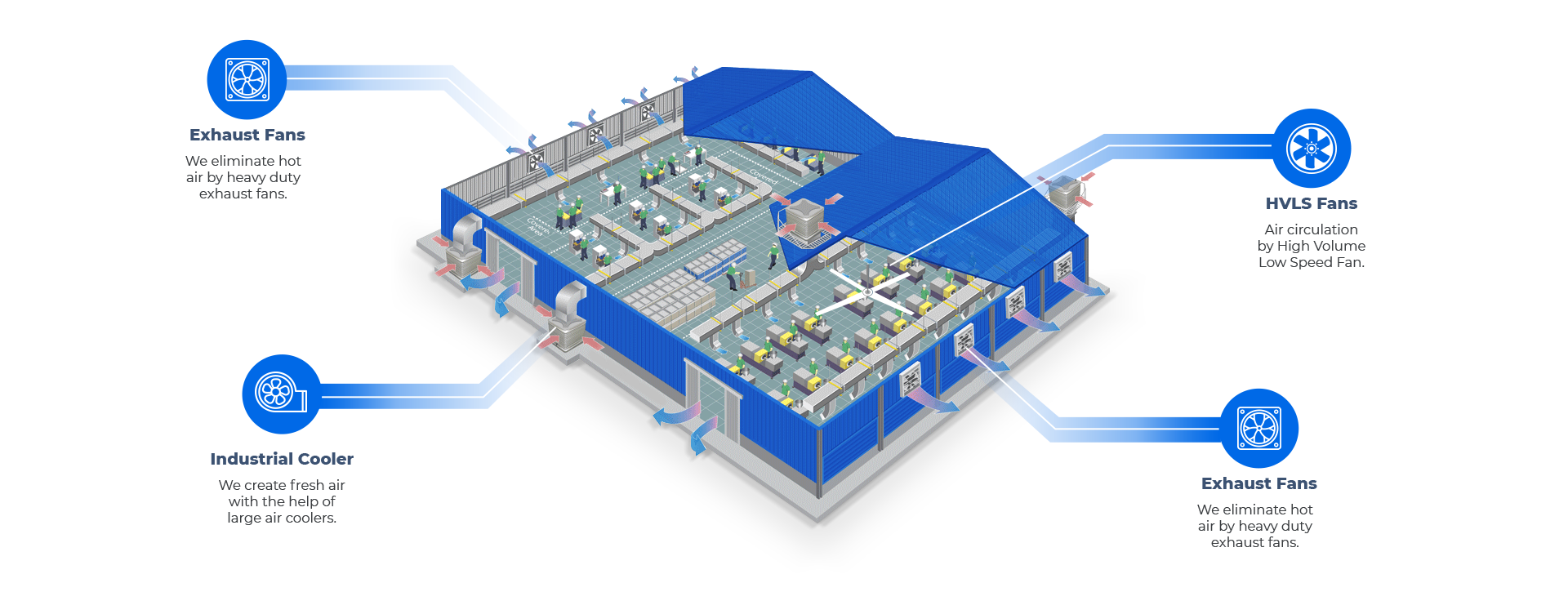
Commercial HVLS Fans - HVLS fans are large industrial ceiling fans created to circulate a lot of airflow at low speeds. They are generally used in commercial and industrial areas to efficiently distribute air and enhance indoor convenience. In commercial space, These fans form a wind chill impact by influencing air movement, which can make the sensed temperature lower and enhance air circulation without relying on unaffected airflow.
There are many different benefits of commercial HVLS Fans, these are:
Commercial HVLS fans are used in different applications at different roles, here we explained some major uses of commercial fans.
Warehouses - They can help diminish power consumption, enhance air circulation, and control condensation.
Retail Stores - This can form more relaxing and alluring circumstances for consumers, possibly leading to expanded sales.
Agricultural Settings - HVLS fans can enhance airflow, decrease humidity, and stop mold evolution in agricultural environments.
Sports Setups - The HVLS fan can enhance reassurance and performance in indoor sports facilities and auditoria.
Manufacturing Process - By enhancing air grade and lowering heat buildup, HVLS fans can improve productivity and security in manufacturing settings.
Installation -
HVLS fans are usually installed from the ceiling operating technical mounting hardware. Correct installation is essential for optimal implementation and security. Regular care, like cleaning and lubrication, is suggested to ensure the fan's longevity and efficiency.
If you want a perfect commercial HVLS fans for your commercial space then you should consider these facts before selecting the HVLS fans. These are -
Ans. Commercial HVLS fans are large-diameters that work at low speeds, forming a strong airflow to enhance air circulation and lower perceived temperatures.
Ans. There are multiple benefits like power efficiency, enhanced air circulation, decreased energy costs, and versatility.
Ans. You should consider factors like the size of the area, roof height, and preferred airflow. Consult with a skilled HVAC expert for personalized recommendations.